The Vision & Origin
Aligning local roots with global momentum to build a thriving Afro-centric neighborhood enclave on Detroit's historic West Side.
Defining the "AfricanTown" Concept
Just as Chinatowns, Greektowns, and Little Italys have historically offered strong economic anchors, commercial hubs, and cultural sanctuary for immigrant groups in American cities, AfricanTown Detroit is a deliberate, community-driven effort to establish a geographic home for African and African-American heritage.
Our vision goes beyond revitalization; it is a celebration of our history. We focus on showcasing the vibrant creativity of the African diaspora through music, culinary arts, fashion, and visual arts.
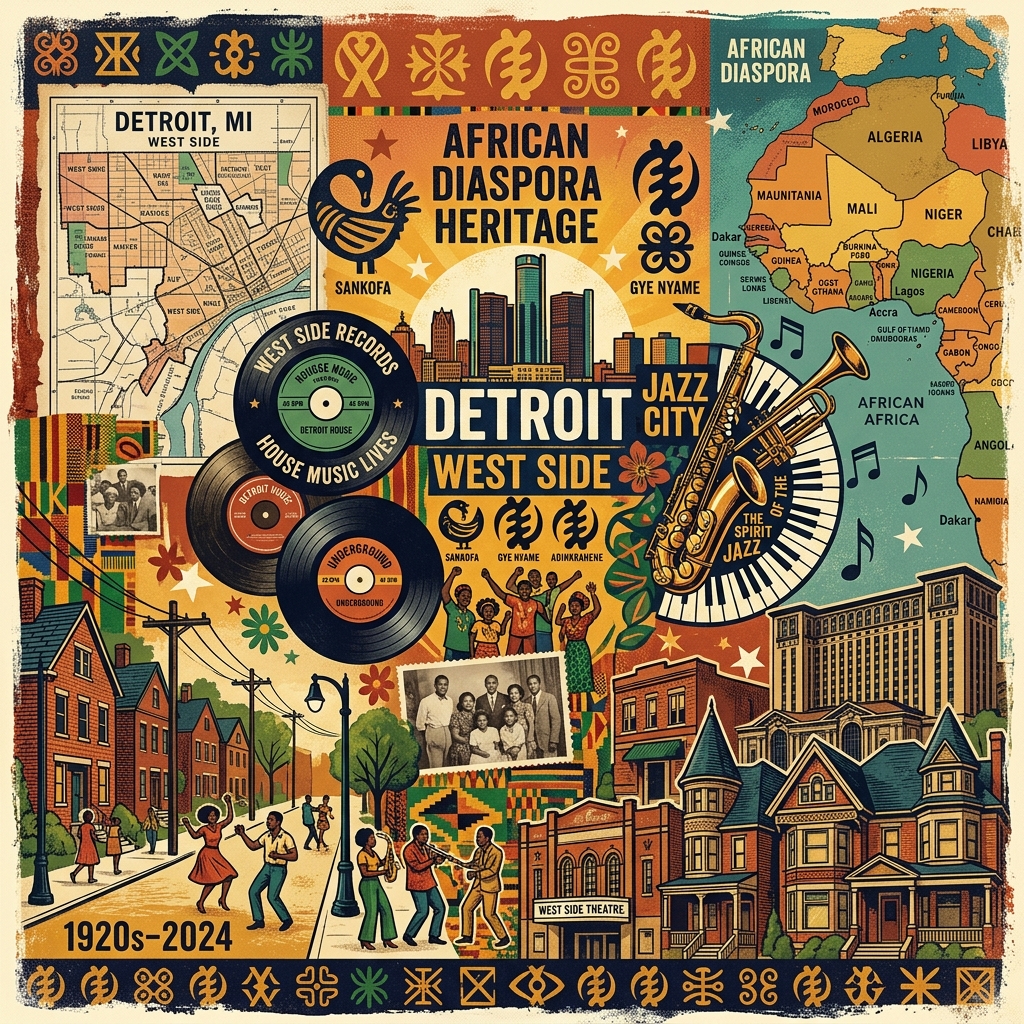
Through the center, we will hold archives of our musical footprints—recalling how the local neighborhoods of Russell Woods and Nardin Park gave rise to pioneering voices in Jazz, R&B, and Detroit's global electronic House music scene.
Musical Footprint
From historic jazz clubs to the birth of House music, preserving and celebrating our rhythm and blues roots.
Culinary Arts
Showcasing West African staples alongside Southern soul food in a new retail and culinary incubator hub.
Fashion & Design
Providing manufacturing and boutique retail spaces for African-centered apparel and textile designers.
Visual Arts
Vibrant outdoor murals and indoor galleries showcasing local and international African diaspora artists.
The Hamtramck & Bangla Town Precedent
Demographic and economic rebirth is a proven path in Metro Detroit history.
Bangla Town
The PrecedentHamtramck, Michigan, was once a highly dense, predominantly Polish immigrant enclave commonly known as "PoleTown". Over the decades, as the original demographic aged and shifted outward, the city faced economic stagnation and commercial vacancy.
By actively welcoming Bangladeshi and Yemeni immigrant families, the corridor transformed into "Bangla Town"—a bustling, culturally vibrant neighborhood filled with Bengali restaurants, grocers, and community centers. This cultural identity became the primary vehicle for the corridor's economic survival.
AfricanTown Detroit
Our VisionWe apply this identical economic strategy to Detroit's historic West Side. By creating a physical hub for the African diaspora, we can re-populate historic neighborhoods like Russell Woods and Nardin Park, while capturing local consumer spending that currently leaves the neighborhood.
This approach aligns naturally with the community's existing demographics, offering a deep spiritual, political, and social connection for Detroit's large African American population.
The Diaspora & Year of Return
Connecting Detroit's local movement to the global momentum of African return and investment.
Architectural Legacy
Turn-of-the-century brick residences are constructed across Russell Woods and Nardin Park, building the architectural foundation of Detroit's middle-class neighborhoods.
Musical Greatness
The West Side becomes a hotbed for jazz artists, Motown sessions, and later, early house and electronic music pioneers, forming a rich local cultural footprint.
Ghana's Year of Return
Ghana hosts the global 'Year of Return', generating massive international momentum and inspiring African Americans to seek spiritual, political, and economic ties to the continent.
Establishing AfricanTown
ACDC channels this local pride and global momentum into real estate acquisitions, local business training, and corridor restoration along Dexter Avenue.